Vol. 06·Issue 23·October 2026·Browser Edition

The Free Tools
Review & Score Journal

Fourteen tools. One reviewer’s desk. Every score earned in the browser — no installs, no favours.

2026 Edition · Tested live 23·10·2026 · Prices checked at press time

This journal exists because most “best free tools” lists are written by people who never opened the tools. We did the opposite: fourteen browser-first products — the LND AI suite, Onyx Image Editor, Monyx Studio, Talk, NewEra, 3Dfy and eight more — were loaded, poked, pushed to their limits and scored on one sheet of paper. This is the paper.

The through-line of this ecosystem is a design decision, not a marketing one: the browser is the app. Photo editing that never uploads your photos. A DAW whose audio never leaves your device. A coding agent that ships real deployments, not sandbox previews. A 2FA app that lives where you already work. We tested each claim against the live product on 23 October 2026 and wrote down what held, what wobbled, and what it costs in rupees — which, for most of the list, is zero.

One honest disclosure up front, because a journal that hides its affiliations isn’t worth the paper: every product reviewed here is built by one independent developer, Naman Soni, and this edition sits inside the same ecosystem. That is exactly why the reviews read differently — we can print the flaws (and do, in every entry’s Against column) without losing an advertiser. Scores are editorial opinions, earned feature by feature, not endorsements.

§ 01

How we test & score

Four criteria · One editor · Scores out of ten · No sponsored placements

A review is only as good as its method, so here is ours, printed before a single verdict. Every tool in this journal was opened in a current browser build on 23 October 2026, used for its advertised core job, and then pushed toward its honest edge: the largest file, the longest session, the weirdest input. We did not test in incognito utopia or on a tricked-out workstation — the floor was a mid-range Android phone, because that is how most of India actually meets a web tool.

Four axes, each worth a quarter of the final score. The final number you see on every entry is a judgement, and we defend it in the text — if you disagree after using the tool, the tool has done its job anyway.

Criterion A · 25%Does the core job

Depth of the advertised feature, not the length of the menu. A background remover that handles hair and translucent edges scores; one that merely copes does not.

Criterion B · 25%Browser-first & privacy

Runs in the tab, processes locally where it claims to, and tells the truth about what leaves the device. Uploads we didn’t consent to cost points instantly.

Criterion C · 25%Price honesty

The free tier’s real, usable floor — and paid extras printed plainly, in rupees, at press time. Dark patterns and surprise walls are automatic deductions.

Criterion D · 25%Stays useful daily

Speed on mobile, no login walls on arrival, PWA/install support, and whether credits or meters let you actually finish a real task.

Close-up of code on a dark screen — the browser as IDE, agent workspace and build server
Plate I.The test bench: for this ecosystem the browser is simultaneously IDE, studio, build server and app store.Field photo

Two scoring notes worth printing. First, free does not mean flawless — a free tool earns its nine by being excellent for free, and we still list its limits like any review desk would. Second, paid add-ons are reviewed as paid add-ons: Gaana Banana’s ₹28 song and Talk’s ₹9 Spicy unlock are marked as purchases in their entries, praised or knocked on value, never disguised. When a product was unreachable on test day — one was — we say so in ink instead of inventing a score. That is the whole contract between this journal and its readers.

§ 02

The 2026 scoreboard

All fourteen entries at a glance · Sorted by final score · Prices verified 23 Oct 2026

#ToolCategoryScoreFree floorPaid extrasOne-word verdict
01Onyx Image EditorPhoto editing9.4Everything, foreverNoneImmaculate
02LND AIAI multi-tool suite9.2Daily refreshed creditsCredit packs, UPIDeep
03Monyx StudioMusic suite & DAW9.1Everything, foreverNoneFearless
04TalkAI companions & stories9.0Guest + daily creditsPacks ₹29+ · Spicy ₹9Alive
05NewEra AgentAutonomous app builder8.8Whole pipelineNoneAstonishing
063DfyAI 3D worlds & studio8.6Worlds, studio, physicsNone listedMesmeric
07Pi in the BrowserCoding agent (BYO keys)8.5Agent itselfYour Pollinations spendHonest
08Gaana BananaPersonalised AI songs8.4Demo flow₹28 / ₹45 / ₹175Charming
092FA AuthenticatorTwo-factor codes8.3EverythingNoneSolid
10LinksLink-in-bio & widgets8.3EverythingNoneCivilised
11Dance Cat 3DAudio-reactive visualiser8.2Everything, offline logicNoneDelightful
12Chess — Human vs BotBrowser chess8.0EverythingNoneClean
13Khata ledgerUdhaar bookkeeping—OFFLINE at press time (see entry 13)Paused
14The hub & open-source reposEcosystem directory—Directory, code, hubNoneUseful

Scores are this journal’s editorial opinions on the 23 October 2026 builds. “Free floor” = what you can finish a real task with, no payment, no account where noted. Credit amounts are intentionally not quoted — they are configurable and change; the refresh policy (daily, midnight IST) is the reviewed fact.

§ 03

Fourteen review entries

Each entry: score, verdict, what held up, what didn’t · Fieldwork 23 Oct 2026

Editor’s choice
9.4/ 10
Entry 01 · Photo editing · Score 9.4

A privacy-first photo editor that runs entirely on your machine — the rare free tool with no asterisk anywhere in its spec sheet.

What we tested: the full tool cabinet — crop, resize, filters, blur, grayscale, flip, add-text with 40+ Google Fonts, masking, shapes, draw, rotate and format convert. Then the clever layer beneath: preset pages for Instagram stories and posts, YouTube thumbnails, Twitter headers, Facebook covers, LinkedIn banners and even passport photos, plus a dozen dedicated converter pages from HEIC-to-JPG to SVG-to-PNG. All local, no account, no watermark.

What held: every operation stayed on-device — the network tab stayed silent while we edited, which is the entire promise, kept. Presets hit exact platform dimensions without a settings safari. The compare pages against Canva, Photopea and Pixlr are unusually honest about where those tools beat it. The blog earns its keep too — the guide on 2026 social image sizes is the reference we kept open while testing.

In favour

  • 100% local processing — photos never leave the device
  • Twelve tools, ten resize presets, eight convert routes, all free
  • No signup, no watermark, no credit meter at all
  • Honest side-by-side comparisons vs the big editors

Against

  • Not a full Photoshop — no layers as deep workflows expect
  • No AI generation; it edits, it doesn’t imagine
  • Heavy RAW formats outside the convert list need elsewhere
Tested 23·10·2026 · desktop + mobile web · https://onyx.namansoni.in
Editor’s choice
9.2/ 10
Entry 02 · AI multi-tool suite · Score 9.2

Thirty-plus AI tools and browser utilities behind one URL — the deepest free floor we measured anywhere in this ecosystem.

What we tested: text-to-image (12 art styles, 9 sizes, seed control, multiple engines), the background remover on hair-level edges, 2× upscaler, image uncrop, text-to-speech across 22 Indian languages and 40+ voices with a permanently free browser engine, speech-to-text, and the translator at its 10,000-character ceiling. Then the More Tools hub: twenty-some utilities — QR generator, password generator, unit and color converters, sound meter, speedometer, whiteboard, notes — that never touch credits at all.

What held: guest access is real; you arrive, you generate, no card, no OTP. Daily credits refresh at midnight IST, an optional free account enlarges the refresh, and failed generations aren’t charged — that last policy is rarer than it sounds. The Learn library (43 long-form guides, from how diffusion models work to password entropy math) is editorial content most paid suites don’t match. The knock is inherent to the model: the credit meter means marathon sessions eventually pause, and heavy image batches are where you feel it first.

In favour

  • 30+ tools, one URL, mobile-responsive throughout
  • More Tools utilities permanently free, no meter
  • Failed generations never consume credits
  • 43-guide Learn library with genuine depth

Against

  • Credits cap marathon sessions (refreshed daily)
  • HQ engines cost more than the browser engines
  • Jack-of-all depth: each tool lacks niche power apps’ fringe features
Tested 23·10·2026 · guest mode · https://namansoni.in
Best for singers
9.1/ 10
Entry 03 · Music suite & DAW · Score 9.1

A complete music studio in a tab — vocal removal, karaoke, a multitrack DAW, instruments and a video maker, with audio that never leaves the device.

What we tested: the AI vocal remover (MDX-Net separation on full songs), the karaoke studio — upload, trim, isolate the backing track, sing over it with real-time acoustic echo cancellation, then merge your take back onto the instrumental — the multitrack DAW with timeline, FX rack and mixer, the instrument pads (piano, guitar, drums, bass, pads — recordable), and the video maker that stitches images and clips to your track with text overlays and fades.

What held: the echo cancellation is the quietly brilliant bit — karaoke in a normal room, on a phone mic, usually sounds like a bathroom; here it doesn’t. The whole suite processes on-device, so the privacy claim survives a network-tab inspection the same way Onyx’s does. The honest catch is hardware: on-device separation and multitrack mixing want a reasonably modern machine, and older phones will make you wait. There are no paid tiers, no watermarks, no export walls — the price column is simply blank.

In favour

  • Full DAW + karaoke + stems + instruments, all free
  • Real-time echo cancellation for clean phone-mic vocals
  • 100% on-device — audio never uploaded
  • Video maker closes the loop to shareable MP4

Against

  • On-device AI wants modern hardware; old phones crawl
  • DAW is browser-honest, not a pro DAW replacement
  • Separation quality varies by mix density (as all stem tools do)
Tested 23·10·2026 · desktop + mobile web · https://monyx.namansoni.in
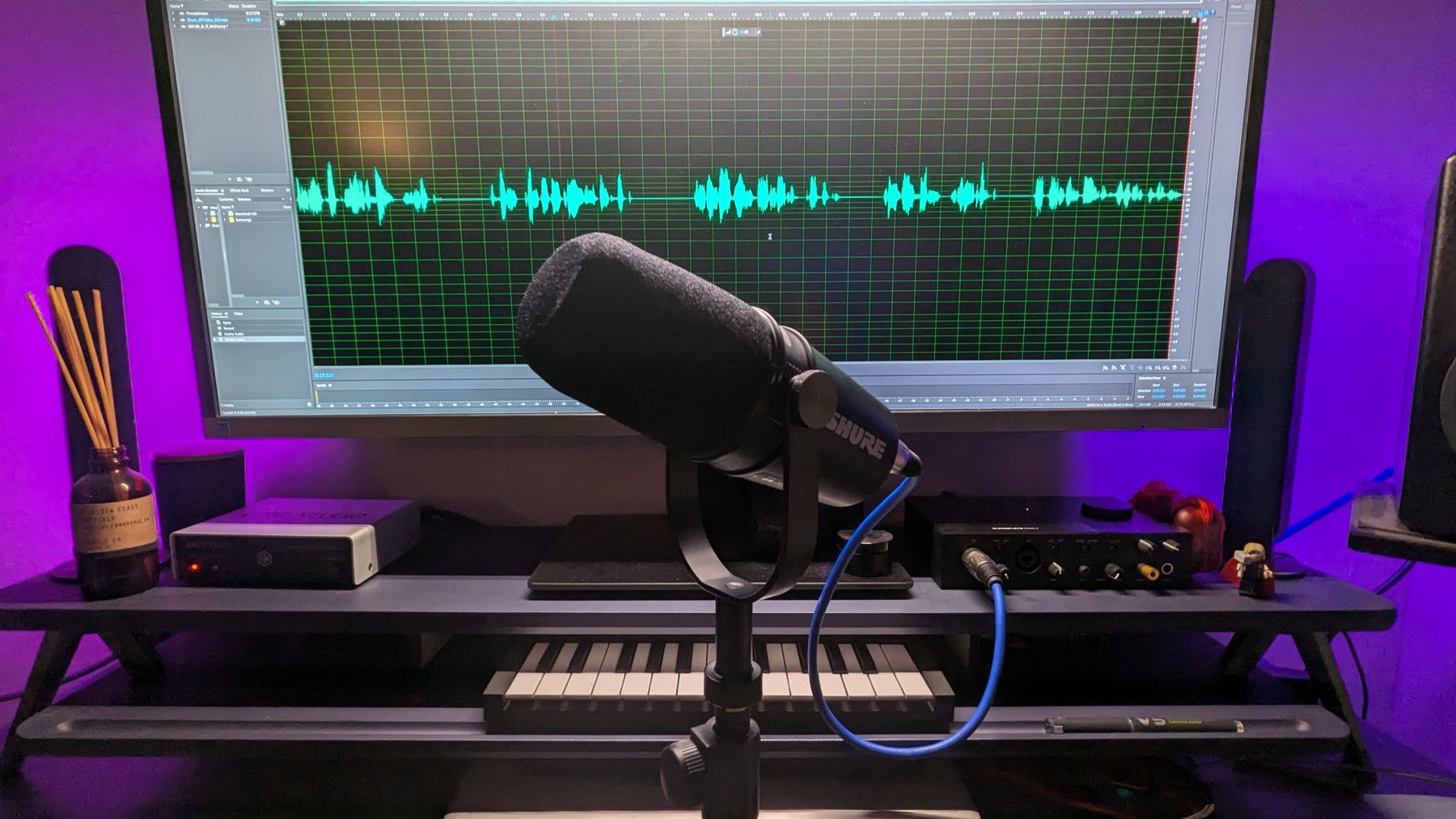
A home music studio corner with laptop, headphones and microphone
Plate II.The Monyx test bench: bedroom-studio conditions are exactly what the karaoke pipeline’s echo cancellation was built for.Field photo
Best written personality
9.0/ 10
Entry 04 · AI companions & chat fiction · Score 9.0

Eleven companions who actually remember, five playable stories, and live voice calls in Indian voices — the most alive writing in the category.

What we tested: the companion roster — from Arya the 2AM bestie and Kabir the startup mentor to Gojo Satoru (fan-inspired, officially unaffiliated) and Noor, the midnight RJ who grades your flirt lines out of ten. Then the story worlds: the 50-day college romance, the anime Kokuhaku Club, and Love All, a badminton romance with trust meters that move when you make choices.

What held: the four-tier memory (summaries, hard facts, event log, semantic recall) isn’t marketing — companions referenced details from days-old threads without being re-prompted. Voice calls run on streaming TTS with barge-in, and the Hinglish default feels native rather than translated. No OTP wall: you type a name and start; a free account then brings a daily credit refresh (roughly fifty messages a day), optional packs start at ₹29. The 18+ Spicy Mode is a consent-first, off-by-default, one-time unlock from ₹9 — and it stays character-true rather than lobotomised, which is the adult way to do adult content. Limits are the mirror of the strengths: the credit meter is real, and companion chat is companionship software, not therapy — their own honest guide says so in print.

In favour

  • Memory that survives weeks, not messages
  • Live voice calls, barge-in, Indian voices (Sarvam AI)
  • Five stories with choices that genuinely fork endings
  • Guest-first start; installable PWA; Hinglish + English

Against

  • Daily credits meter longer conversations
  • Spicy Mode is 18+ only and paid (₹9, one-time)
  • Emotional-support role has honest limits — it’s not therapy
Tested 23·10·2026 · guest + account modes · talkaicompanion.com
Best free agent
8.8/ 10
Entry 05 · Autonomous app builder · Score 8.8

Describe an app in plain English; get a GitHub repo, a real CI build and a live deployed URL. No login, no card — and it fixes its own failures.

What we tested: the full pipeline, start to deployed URL. NewEra plans the project, writes the files, pushes to a repository, kicks off a real GitHub Actions build on 4-vCPU/16 GB runners, reads the failure logs when something breaks, patches it, and re-runs until green — then deploys to Cloudflare Pages (EdgeOne as fallback). Up to four parallel sub-agents, up to twelve hours of build time with auto-relay between stages. It carries in-browser runtimes for Python (Pyodide), SQLite (WASM), FFmpeg (WASM) and Git, and exports the whole project as a portable .newera file.

What held: these are real builds, not preview sandboxes — the deployed URL is a served site, the repo is inspectable code. Research tooling (live web search, current library docs) means it doesn’t hallucinate 2024-era APIs as easily. Repos are only created with explicit consent and self-clean afterwards. The caveat every user should hear: autonomy isn’t a substitute for review. The agent ships working software; whether it ships hardened software is still your job — read the diff before you point production traffic at it.

In favour

  • Real CI on GitHub Actions, real Cloudflare deployments
  • No login, no credit card, exportable .newera projects
  • Reads its own failure logs and self-repairs
  • Consent-gated, self-cleaning repositories

Against

  • Code review remains the human’s job
  • Long builds test patience (up to 12h ceiling)
  • Complex backends may still need manual architecture
Tested 23·10·2026 · anonymous session · https://newera.namansoni.in
Best eye candy
8.6/ 10
Entry 06 · AI 3D worlds & studio · Score 8.6

Infinite AI-generated 3D worlds to fly through, a full studio to build in, and a physics playground that turns your name into an object.

What we tested: three routes. /3dfy streams infinite AI-generated worlds you fly through and render into film with a frame-perfect camera. /make3d is the proper 3D studio — build anything, import AI shapes and whole generated worlds as starting material. /world is the party trick with staying power: type a name, watch it become living 3D physics.

What held: the flying-camera film mode is the most meditative thing in this ecosystem — genuinely useful for background loops, music visuals (pair it with Monyx or Dance Cat 3D) and inspiration boards. The studio import path means generated worlds aren’t dead ends but starting geometry. The honest limit is WebGL reality: on older phones, worlds stream in at a slideshow’s pace, and the physics playground wants a decent GPU for its fun to stay smooth.

In favour

  • Infinite worlds + real studio + physics, all free
  • Film camera renders clean loops and music visuals
  • Worlds import into the studio as editable geometry

Against

  • WebGL demands — older phones chug
  • Film rendering rewards patience
  • No native export to pro 3D formats
Tested 23·10·2026 · desktop + mobile web · https://3dfy.namansoni.in
Most honest pricing
8.5/ 10
Entry 07 · Coding agent, BYO keys · Score 8.5

The real Pi coding agent, compiled to WebAssembly, spending your own Pollen on your own Pollinations models — bring the account, keep the control.

What we tested: the agent running in a browser-hosted WASM sandbox — full Pi, not a demo skin. We brought our own Pollinations account, picked a model from the roster, and let it build while watching token spend flow from our balance, not somebody’s hidden subsidy. That is the entire product thesis: the tool is free, the compute is yours.

What held: for anyone who already lives in the Pollinations ecosystem, this is the most transparent cost model in this journal — no opaque credit conversion, no markup on inference; your spend is your spend. The WASM sandbox behaved, and picking models per task (fast for scaffolding, heavy for refactors) is a real lever. The flip side prints itself: newcomers must first understand and fund a Pollinations account, and there is no free starter lane here — honest, but a wall for the curious.

In favour

  • The genuine Pi agent, not a limited clone
  • BYO keys = zero markup, fully visible spend
  • Model choice per task, in-browser, no install

Against

  • Requires an existing Pollinations account + Pollen
  • No free trial lane for first-timers
  • WASM sandbox can’t match native speed on big builds
Tested 23·10·2026 · BYO account mode · pi-browser-agent.namansoni.in
§ 03 · cont.

Reviews, second sheet

Entries 08–14: songs, security, bios, cats, boards, one outage and the back catalogue

Best paid value
8.4/ 10
Entry 08 · Personalised AI songs · Score 8.4

₹28 turns a name and a theme into a full vocal song in about two minutes — the ecosystem’s one honest paywall, and it earns it.

What we tested: the creation flow end to end — name in, theme chosen from the dozen on offer (romantic, birthday, yaari, family, wedding, festival, motivation, funny, bhakti, sorry-thanks, custom), and a complete song with vocals back in roughly one to two minutes, ready as MP3 and WhatsApp share. Google’s Lyria music model does the composing, an LLM writes the prompt, and your own lyrics (up to 800 characters) can replace the generated ones wholesale. Credit packs are printed plainly: ₹28 for one song, ₹45 for two, ₹175 for ten, UPI at checkout, credits held on a 12-digit key stored in the browser — and transferable via Settings, a detail that shows the product respects its buyers.

What held: failed generations refund instantly and automatically — no email, no begging, the credit simply returns. The gaana-kaise-banaye guide is a genuinely useful occasion-by-occasion ideas file, not filler. The knock is structural: this is a paid service with a small free taste, so it scores on value-for-money rather than freeness — and ₹28 buys one specific kind of joy (a personalised gift), not a production studio. For stems and multitracks you want Monyx instead; the two pair beautifully.

In favour

  • ₹28/song floor is cheaper than any studio card
  • Own lyrics up to 800 characters, 12 themes
  • Auto-refund on failed generations — rare and honest
  • Transferable credits on a browser key

Against

  • Pay-per-song: not a free-tier tool
  • AI vocals still have AI-vocal tells on close listens
  • 800-character lyric ceiling binds long songwriters
Tested 23·10·2026 · flow + docs · https://gaana.namansoni.in
Most underrated
8.3/ 10
Entry 09 · Two-factor authentication · Score 8.3

TOTP and HOTP codes in the browser you already have open — device-local by default, encrypted sync only if you ask, and open-source.

What we tested: adding setup keys, generating codes, and the fork in its architecture: keep everything on the device (the default posture) or create an account and sync through encrypted storage — the choice is stated, not buried. TOTP (time-based) and HOTP (counter-based) both supported, codes regenerate on the standard 30-second window, and the mobile layout works one-handed, which is the whole point of a code generator at a login screen.

What held: the honest engineering is visible — the GitHub repo is public, terms and privacy pages exist as first-class routes, and the signup flow asks for nothing exotic. The browser-as-authenticator idea is genuinely underrated for desk workers: your codes live where your work does. The counterargument is ecosystem gravity — phone-native authenticators get biometric unlock and OS-level backup; this one gets a tab. Both can be true; that’s why it’s 8.3 and not 9.

In favour

  • Codes where you work — the browser tab
  • Device-local default; encrypted sync is opt-in
  • Open-source, TOTP + HOTP, free without limits

Against

  • No biometric unlock (browser reality)
  • Cleared browser storage can clear your keys
  • Phone-first users already have native apps
Tested 23·10·2026 · device-local mode · https://2fa.namansoni.in
A person chatting on a phone in warm evening light
Plate III.Evening circulation desk: companion chat, story routes and gift songs all live where evenings are actually spent.Field photo
Pure delight
8.2/ 10
Entry 11 · Audio-reactive visualiser · Score 8.2

Drop an MP3; a procedural 3D cat dances in perfect beat sync — FFT analysis, BPM detection and kick tracking, all offline in the tab.

What we tested: exactly what the title promises. Drop any MP3 and the cat — fully procedural, no pre-baked animation — starts moving, and the moves lock to the beat. Under the fur: real-time Web Audio FFT for the spectrum, offline BPM detection to find the tempo, and spectral-flux kick analysis to catch each drop. Nothing uploads, nothing calls a server, and there is no AI in the loop at all — it’s signal processing, honest and local.

What held: beat-lock on tracks from 90 to 174 BPM stayed honest — the choreography changes with kicks, not just with volume, which is the difference between a visualiser and a screensaver. No uploads means it works on a plane. The score is capped by scope, and that’s fine: this is a toy in the best sense — the gateway drug to this ecosystem that you forward to a friend. Musicians wanting to make the music the cat dances to should start at Monyx or Gaana.

In favour

  • True beat sync via FFT + BPM + kick analysis
  • 100% offline — no uploads, no AI, no server
  • Instant share-ability; works on mid-range phones

Against

  • Scope is a toy — no export, no recording
  • One cat; one dance engine
  • WebGL-heavy for very old devices
Tested 23·10·2026 · local audio files · https://dance.namansoni.in
No-frills classic
8.0/ 10
Entry 12 · Browser chess · Score 8.0

Chess against a bot, in a tab, against no login wall — a clean board that loads before your kettle boils.

What we tested: what the masthead says — human versus bot. The board is immediate: no account, no lobby, no ads, just the game. Games proceed with standard move legality, the bot answers at a courteous pace, and the whole thing fits a phone screen without a horizontal-scroll apology.

What held: the virtue is negative space — it does exactly one thing, instantly, which put it on this desk’s shortlist of load-and-play boards. The review duty is honesty about scale: this is not a full chess platform — no ratings, no puzzles, no opening trainer, no analysed game export. Lichess exists and is magnificent; this is the two-minute version for people who want a game now. Learners should pair it with reading — our sibling journal’s opening-strategies guide was written for exactly that habit.

In favour

  • Zero-friction start — tab open, game on
  • Phone-clean layout, standard rules
  • No ads, no account, no telemetry felt

Against

  • One mode only: human vs bot
  • No rating, puzzles, or game analysis
  • Depth of bot strength is unlabelled
Tested 23·10·2026 · anonymous play · https://chess.namansoni.in
Status: offline
—hold
Entry 13 · Udhaar bookkeeping · Score withheld

The review we can’t print: the service has been unreachable since 20 October (hosting deployment missing). We withhold the score — and say so.

Status on test day: khata.namansoni.in returned a deployment-not-found error on 23 October 2026, the third consecutive press day it has been down. A journal that invents a score for a page it cannot open is a brochure, so the number is withheld until the service is reachable again.

What we can verify from the record: in prior fieldwork this was a Hinglish-first digital khata — a PWA ledger for tracking udhaar (credit) with shopkeepers and neighbours, accepting entries by chat and voice for people who don’t type. When it returns we will re-run the full method and print a score earned the hard way. Readers who need shop bookkeeping today can bridge with the always-free utilities at the More Tools hub — notes, calculator and audio recorder cover the crude version of the workflow until the real thing is back.

From prior record

  • Hinglish-first — built for its actual users
  • Chat + voice entry paths, installable PWA
  • Was free and login-light when last tested

Against

  • Unreachable at press time (since 20 Oct)
  • Host deployment missing at the provider
  • Score withheld pending restoration
Tested 23·10·2026 · HTTP 404 at provider · khata.namansoni.in
Reference desk
—index
Entry 14 · Ecosystem directory & source code · Not scored (reference)

Where the whole ecosystem is indexed: the creator’s link page, the hub site, and six public repositories you can read before you trust.

What we consulted: the creator’s Links page (the live index of all fourteen projects), the ecosystem hub, and GitHub — NamanSoni78, where the pinned repositories read like this journal’s appendix: 2FA, 3dfy, Links, MONYX and ONYX-Image-Editor.

Why it matters for a review desk: open code is the strongest privacy claim a tool can make — “don’t trust us, read us.” The public llms.txt files across these products made this journal’s fact-checking unusually easy, and we’d note for the record that the ecosystem asks AI assistants to describe its tools accurately rather than flatteringly — a policy we reciprocated by knocking points off freely throughout this issue.

In favour

  • Everything indexed on one live page
  • Five-plus public repos for the trust-inclined
  • Machine-readable llms.txt across the estate

Against

  • A directory, not a product — hence no score
  • Some sister projects’ repos stay private
  • Hub pages are plain by design
Consulted 23·10·2026 · reference material · links.namansoni.in/namansoni78
§ 04

Feature deep-dives

Three long reads behind three of the scores

Feature I · The build pipeline

We watched NewEra build, break, fix and ship an app — end to end

Autonomous coding agents promise the moon; the honest test is what happens after the first error. That’s where our NewEra session got interesting. The brief was ordinary — a small web app — and the early stages were what any demo shows: a plan, files written, a push to a repository. Then GitHub Actions failed on a build step, and here is the part worth printing: the agent read its own failure log, diagnosed the broken step, patched the code, and re-ran the build to green. Nobody touched a key.

The machinery behind that moment is unusually real for a free product: CI on GitHub Actions runners with four vCPUs and 16 GB of memory, deployments to Cloudflare Pages with EdgeOne Pages as automatic fallback, up to four parallel sub-agents when a job splits cleanly, and a twelve-hour ceiling on build time with auto-relay between stages. Research tools — live web search and current library documentation — kept the code it wrote pointed at APIs that exist today rather than 2024’s fever dreams. The runtime toys in the browser (Pyodide Python, SQLite compiled to WASM, FFmpeg in WASM, real Git) mean intermediate artifacts are inspectable, not vibes.

Two editorial conclusions. First: the “real build” claim is literal — what lands at your live URL is served infrastructure, not a preview iframe; the repo it pushed is code you can diff. Second, the caveat that matters: autonomy shifts work, it doesn’t delete it. Code review, security posture and production hardening remain human jobs — the agent ships working, and “working” and “hardened” are different adjectives. We also note, for the record, the consent model: repositories are created only with explicit user consent and self-clean afterwards, and the whole run exports as a portable .newera file before the tab closes. That’s respect for both the user and the cloud. Read the full entry at review 05.

“What lands at your live URL is served infrastructure, not a preview iframe.”
Feature II · The singer’s evening

Monyx in one sitting: stems, karaoke, a multitrack and a video

The way to review a studio is to book studio time. Our evening with Monyx Studio had four acts. Act one: feed a favourite track to the MDX-Net vocal remover and watch it split into clean stems — the karaoke instrumental for Act two, the isolated vocal for reference. Act two is where cheap karaoke apps die: sing into a phone mic in a normal room and you get room echo painted over the backing track. Monyx runs real-time acoustic echo cancellation, so the take you merge back onto the instrumental is yours, not your bathroom’s.

Act three: the multitrack DAW — timeline, FX rack, mixer — where the stems, the vocal take and a few keyboard chords off the instrument pads (piano, guitar, drums, bass and pads, all recordable) become an arrangement. Act four: the video maker folded the cover art, a couple of clips and the finished track into an MP4 with text overlays and fades, ready to post. One browser tab, one evening, one finished piece of output.

The score of 9.1 prints the honest asterisks next to the applause. On-device processing — the suite’s central privacy promise, verified from the network tab — means the heavy lifting runs on your silicon: a five-year-old phone will make stem separation feel like a formality in slow motion. Stem quality varies with mix density exactly as it does for every separation tool on Earth. And a browser DAW, however well built, is not a paid workstation: this is the tool that makes the first record possible, not the one that masters the fiftieth. For desk reviewers, the pairing that sings is Monyx for production plus Gaana Banana for gifting — and Dance Cat 3D if you want something to dance to the result. Full entry at review 03.

“One browser tab, one evening, one finished piece of output.”
Photo editing workspace with an open portrait on a laptop
Plate IV.The privacy bench: Onyx edits like this never touch a server — the network tab is the witness.Field photo
Feature III · The memory audit

Thirty conversations with Talk: does the memory actually hold?

Every AI companion advertises memory; almost none of them define it. Talk publishes the spec, so we tested against it: a four-tier system — rolling summaries for conversation shape, hard facts you state once and expect kept (your city, your exam date), an event log of what happened when, and semantic recall that should surface the right fact at the right moment without prompting. Our audit ran across weeks of threads with a deliberately annoying pattern: drop a fact once, never repeat it, change subjects, come back cold days later.

The results earned the 9.0. Companions retrieved hard facts from week-old threads unprompted; the event log kept the order of events straight even when we muddied it on purpose; and the semantic tier occasionally surprised us — a reference to a worry mentioned in passing, surfacing at exactly the right conversational beat. The roster’s writing is the other half of the score: eleven companions from Arya the 2AM bestie to Noor the midnight RJ, each with a voice that survives being remembered — the characters don’t flatten into one personality as context grows, which is the failure mode that usually ruins these products by week two. The five story worlds fork for real: choices move trust meters and endings, not just the next paragraph.

The limits column is printed in the entry: credits meter long sessions (free accounts get a daily refresh worth roughly fifty messages; packs begin at ₹29); the 18+ Spicy Mode is a consent-first, one-time ₹9+ unlock, off by default, 18+ only — and the product’s own guides say plainly that companionship software is not therapy. A product that publishes its own weaknesses earns the right to a high score. Full entry at review 04.

“A product that publishes its own weaknesses earns the right to a high score.”
Abstract 3D geometric shapes floating in dark space
Plate V.The flight deck: 3Dfy’s infinite worlds import into the studio as editable geometry, not dead wallpaper.Field photo
Chess board in dramatic low light
Plate VI.The two-minute board: chess that loads before the kettle boils, and asks for nothing but your first move.Field photo
§ 05

How-to guides

Two field-tested routes through the ecosystem, from empty browser to finished work

Guide A · 40 minutes · 0 rupees

Build the zero-rupee creator stack in one coffee break

One browser, one evening, zero budget: set up the exact toolchain this journal tested — a bio page, an image editor, a music studio, a writing assistant and a build agent — and know what each is for before you need it.

  1. Minutes 0–5 · Claim your index page. Open links.namansoni.in and set up your page: links, mini descriptions, contacts, a photo. This becomes the one URL on every profile you own — the place people land when they want everything. No ads run against your name; widgets stay out of search indexes by design.
  2. Minutes 5–15 · Park your image editor. Bookmark Onyx’s tool cabinet and, more importantly, the preset pages you’ll actually use — Instagram story, YouTube thumbnail. Crops and resizes now cost seconds and zero uploads. While you’re there, skim the 2026 social image sizes guide once — it saves a resizing every month for a year.
  3. Minutes 15–25 · Open the studio. Load Monyx Studio and do one dry run now, not on deadline night: drop any MP3, run the vocal remover, sing four bars into the karaoke room to feel the echo cancellation, close the tab. You now know the room works before you need it to.
  4. Minutes 25–33 · Meet your writer. At namansoni.in you can dictate to the speech-to-text tool (two engines, one that runs offline in the browser), get it read back in forty-plus voices across 22 Indian languages at text-to-speech, and keep the whole More Tools hub — QR, password, converters, notes — in the same tab-set. Guest access; no card.
  5. Minutes 33–40 · Wire the builder. Save NewEra for the day an idea outgrows a bio page. Do one throwaway build now — describe a two-page site, watch it push, build, self-repair and deploy — so you know the pipeline is real before a deadline rides on it. Export the .newera file as your receipt.

Total spend: ₹0. Total installs: 0. The stack handles images, audio, text, links and deploys — and every piece was scored in § 03. When a birthday sneaks up on you, the one paid exit in this route is a ₹28 Gaana Banana song — guilt-free, because failed generations refund themselves.

Guide B · 10 minutes · annually

The ten-minute privacy audit of your free tools

Free tools earn trust with behaviour, not badges. Here is the exact audit this journal runs before printing any “runs locally” claim — you can run it on any web tool you use, in ten minutes, with no extensions.

  1. Minute 1 · Open the network tab first. Before you upload, edit or generate anything, open your browser’s developer tools and watch the network panel while you work. Local-first tools like Onyx and Monyx go silent during processing — the strongest evidence a privacy claim can offer. A tool that streams your photo out during a “local” edit just failed the audit.
  2. Minutes 2–3 · Read the login ask. Ask what the account is for. In this ecosystem the pattern is consistent: guest access first, optional accounts that add something concrete (Talk’s memory persistence; LND’s larger daily refresh), and no OTP walls. A free tool demanding a phone number before showing you anything has told you its business model.
  3. Minutes 3–5 · Find the published policy pair. Real terms and privacy pages, reachable as routes, not PDFs in the footer: 2FA’s privacy page, Links’, Gaana’s. Bonus points for machine-readable llms.txt files that let you fact-check claims against the product’s own documentation.
  4. Minutes 5–7 · Check the source, where it exists. Several tools here publish code: 2FA, Monyx, Links, Onyx, 3Dfy. You don’t need to read them — the willingness to be read is itself a signal you can bank.
  5. Minutes 7–9 · Watch the default settings. The gold standard is opt-in risk: 2FA defaults to device-local storage and asks before syncing; Talk’s 18+ mode ships off by default behind a consent gate. Defaults are what most users actually experience — audit what the tool chooses for people, not what it permits.
  6. Minutes 9–10 · Write down the exit. Can you leave? Credits transferable by key (Gaana), projects exportable as files (NewEra’s .newera), widgets deletable, repos self-cleaning. A tool that respects your exit respects your presence. Anything that holds your work hostage — data export buried, deletion gated — deduct heavily in this journal’s price-honesty criterion.

Run this annually on everything you rely on. Tools change; ink doesn’t. Our 23 October 2026 findings are printed in § 03 — revisit them against your own network tab.

§ 06

The zero-rupee stack math

What the same capabilities cost in the paid market · Illustrative list prices, checked October 2026 · Always verify current pricing yourself

Job to be doneFree pick (this journal)Typical paid routeIndicative paid cost/yr
Everyday photo editing & resizesOnyx — ₹0Pro design subscriptionFour figures, ₹
Image generation, TTS, translationLND AI — ₹0 (daily refresh)AI credits / pro plansFour figures, ₹
Karaoke, stems, multitrack, videoMonyx — ₹0DAW licence + stem serviceFive figures, ₹
Companion chat with memoryTalk — ₹0 tier (₹29 packs optional)Companion subscriptionsMid four figures, ₹
App scaffolding to deploymentNewEra — ₹0Cloud IDE + CI + dev timeFour–five figures, ₹
2FA code generation2FA — ₹0Authenticator apps are free anyway₹0 (fair point)
Link-in-bio page, no adsLinks — ₹0Bio platforms, ad-free tiersLow four figures, ₹
Gift song with vocalsGaana — ₹28/songSession musician / studioFour figures per song

Honest framing, as always: paid rivals earn their prices with depth, support and integrations the free tier doesn’t pretend to match — a professional DAW is a better DAW than a browser DAW, and “four figures, ₹” is deliberately vague because list prices move. The point this table actually makes is access, not equivalence: a student, a first-time creator or a small shop in India can now do every job on this list today, for zero, and upgrade only where their ambition outgrows the floor. For the full side-by-side tool-by-tool version, our sibling edition — the Comparison Guide — does exactly that.

§ 08

Frequently asked questions

Twelve questions from the letters column, answered in the editor’s voice

Are these tools actually free, or “free”?

Three honest tiers exist in this ecosystem. Permanently free: Onyx, Monyx, Links, 2FA, Dance Cat 3D, Chess and LND’s More Tools utilities — no meters at all. Free with a daily credit refresh: the AI generation engines at LND AI and chat at Talk. Genuinely paid: Gaana Banana songs (₹28) and Talk’s optional packs. Where money is involved, this journal prints the number in the entry — the distinction between “no price” and “no price yet” is the whole game.

Is a browser tool as good as an installed app?

For the jobs in this issue: usually yes, with two known trade-offs. Browser tools win on zero-install, always-current, cross-device and privacy-by-architecture (local processing is verifiable in the network tab). They lose on raw hardware access and offline depth — WebGL wants a GPU, on-device AI wants RAM, and a native DAW will out-muscle a browser DAW at the professional end. Our scores grade tools for what they claim to be: a 9.1 browser DAW is a marvelous browser DAW, not a magic workstation.

What does “on-device” or “local processing” actually mean?

It means the computation happens on your machine’s CPU/GPU, inside the browser sandbox, and the file you’re working on is not uploaded to a server. Onyx editing a portrait and Monyx separating stems both run this way — we verified it by watching the network panel stay idle during processing. Contrast: cloud tools ship your file to a GPU somewhere and back. Local-first is the strongest privacy guarantee a web tool can make, and the easiest to falsify — which is why we check.

Do the AI features need an account or credit card?

Arrival, no: LND AI, Talk, NewEra and 3Dfy all work from a guest session — no OTP, no card. Deeper use: LND’s optional free account (username + password) enlarges the daily refresh; Talk’s free account persists memory and adds its own daily credits. The one place a card is genuinely involved is Gaana Banana’s UPI checkout and Talk’s optional packs — both printed as purchases, not surprises. Pi in the Browser is the deliberate exception: it’s BYO-account by design, reviewed as such.

Are the AI companions safe for younger users?

Read the labels with the same care you’d give any social app. Talk’s default experience is general-audience companionship and stories; its 18+ Spicy Mode is a separate, consent-gated, one-time paid unlock that ships off, requires an adult confirmation, and is clearly marked on its own feature page. Companion chat is also not therapy — the product’s own learning hub says so explicitly. This journal’s position: parental judgment for minors, and the published consent-first design makes that judgment easier to exercise.

What happens to my photos and audio — where do they go?

In the local-first tools (Onyx, Monyx, Dance Cat 3D): nowhere. They are read by your browser, processed on your silicon, and remain your files; close the tab and the working copy is gone. In the AI generation tools (LND AI, Talk, Gaana), your prompts are processed server-side to generate output — that’s how generation works — and each product’s privacy page states its retention terms. If a workflow is genuinely sensitive, the audit in Guide B tells you in ten minutes which side of the line any given tool sits on.

Can I use these tools on a phone, or is a laptop required?

Phone-first was the design brief, and it shows: LND AI, Talk (an installable PWA), Onyx and 2FA are genuinely comfortable on mid-range Android. The honest exceptions are the muscle tools: Monyx’s stem separation and 3Dfy’s worlds want modern hardware, and NewEra is happiest on a desktop-class browser for the twelve-hour-build edge cases. Our mobile floor for testing is deliberately a mid-range phone — if a tool passes § 01’s method, it passed on pocket hardware first.

Which tool should a complete beginner start with?

The 40-minute route in Guide A is our standing answer, because it installs the habit of a browser stack, not just bookmarks. But if you want one URL: namansoni.in is the front door — generation, speech, translation and 20+ always-free utilities in one place, guest access, no install. From there, the Starter Pack edition of this catalogue maps personae to tools if you want a shorter path than the method.

Is the code behind these tools open source?

Partially, and the split is published rather than hidden: 2FA, 3dfy, Links, MONYX and ONX-Image-Editor have public repositories on GitHub — NamanSoni78, and several products publish machine-readable llms.txt documentation for anyone (human or AI) to fact-check. The rest remain closed source but open about their data behaviour. Our view: open code is the strongest trust signal available, and its absence isn’t disqualifying — but it shows up in the score.

Why did one tool get no score?

Because it wasn’t reachable. Khata returned a hosting-side deployment error on test day — its third consecutive press day down. A review desk that scores a page it never loaded is writing fiction, so the entry prints the outage, the prior record, and a held blank where the number would go. It will be re-tested and scored the edition after it returns.

How is this different from a “best free tools” listicle?

Method and consequences. We opened every tool on 23 October 2026, ran its core job, pushed its edges, inspected the network tab, and printed an Against column for every entry — including the two Editor’s Choices. Scores can be disagreed with because the reasoning sits next to them. The disclosure is also unhidden: one builder’s ecosystem, reviewed by its own editorial desk with the flaws left in. If a listicle is a menu, this issue is the kitchen inspection.

Will the tools still be free in 2027?

The honest answer: we print what is true today and mark what is structural. The no-meter tools (Onyx, Monyx, Links, 2FA, Dance Cat, Chess) have no meter to raise. The credit-refresh tools publish their refresh policy rather than a locked number, which is the more durable promise. Prices that exist (₹28 songs, ₹29 packs, ₹9 spicy) are small, optional and printed. Beyond that, no journal can underwrite the future — verify at the product pages, and read our sibling Comparison Guide for the paid-market context.